Blog / Overload Enforcement
Building an Overload Enforcement Station: Sensors, ANPR and LED Signage
A weight on its own is easy to dispute. We walk through the layers we configure for a limit-and-overload site — the buried plate, the plate-reading camera, the roadside display and the software that holds the record together — in the order a buyer should specify them.
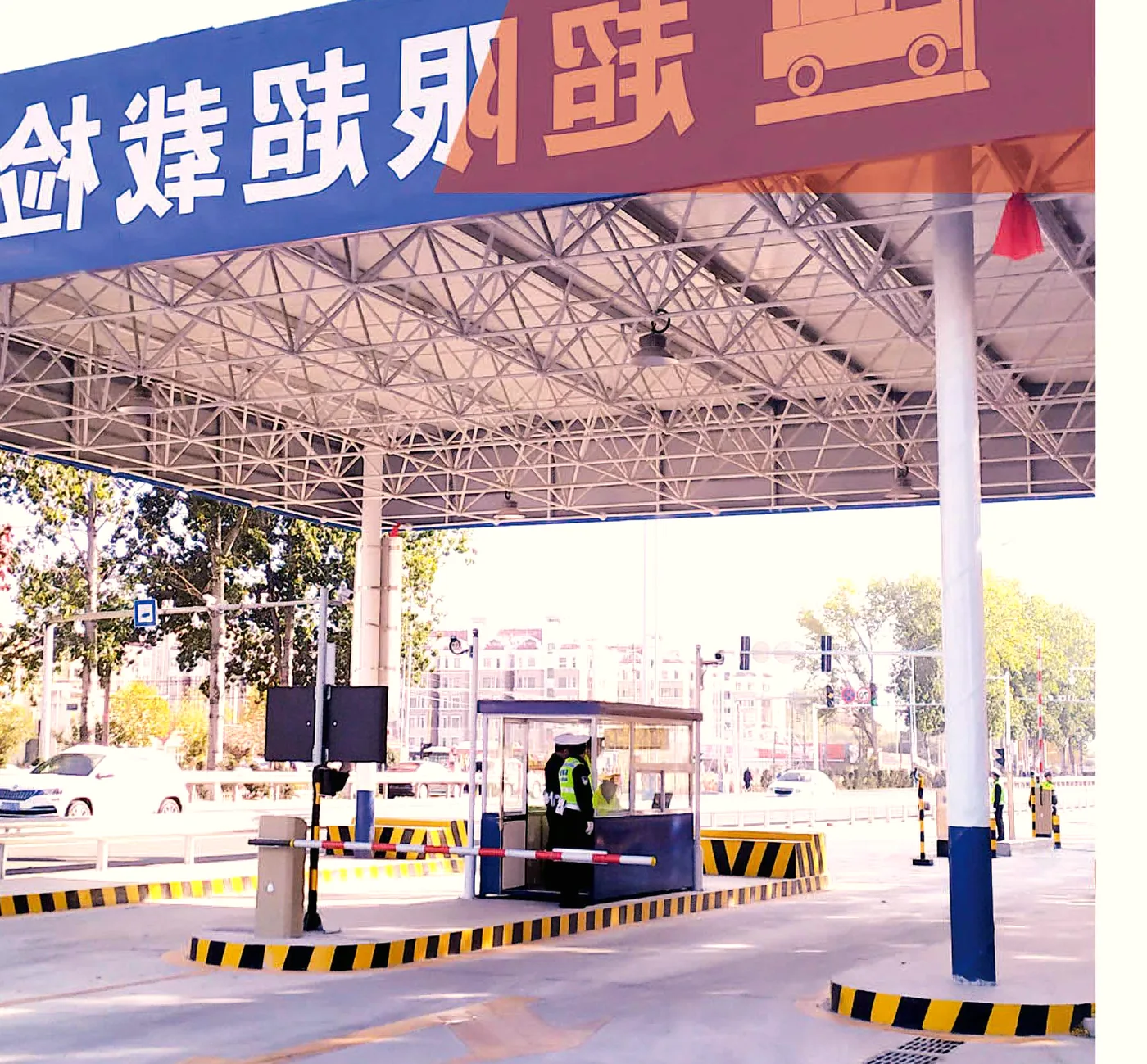
01 / System design
An overload enforcement station is not a weighbridge with a camera attached. It is a chain of evidence: a weight, tied to a vehicle, captured at a known time, with a decision communicated on the spot and a record that survives review. If any link in that chain is weak, the whole measurement becomes arguable, which is exactly what an operator cannot afford. This article walks through the layers we configure for a limit-and-overload site in the order a buyer should specify them, starting with the decision the station has to support rather than with a list of parts.
Start from the decision, not the device
Begin with the outcome. At a highway entrance or a toll plaza the job is usually screening: let compliant vehicles keep moving and pull out only the ones that breach a limit. At a control station the job may be a directed check, where a flagged vehicle is guided into a lane for a closer measurement. At a port gate or a mine the priority can be throughput, with the weight recorded rather than enforced. Those are three different systems wearing similar hardware, and the first question we ask is what should happen when a limit is exceeded.
That decision sets everything downstream. A screening lane needs a fast, trustworthy figure and a way to flag a vehicle without stopping the flow. A directed-check site needs a defensible record. An unattended site needs the record to survive a network drop and a night shift with nobody at the lane. Write the decision down before comparing components, and the supplier conversation becomes much shorter. Our overload enforcement solution is organised around those decisions rather than around a catalogue.
The sensing layer
The measurement starts with a wide-flange plate buried flush in the carriageway. It is 58 mm thick and seats directly in the lane with no civil foundation pit, which keeps the road works short. Rated IP68 and tolerant of 150% overload, it is built for a site where the vehicles that matter most are the ones above the limit. The stated dynamic accuracy is ±0.5% on gross weight, with the product handbook expressing the result as Class 1 for total weight and Class E for single axles, across an operating envelope of 1–100 km/h.
The method is full-wheel load integration: the plate gathers the load across the whole contact event of each wheel rather than sampling a peak. That matters at an enforcement site, where a driver who knows a check is coming may hug the lane edge, cross at an angle, weave, take an S-shaped detour, rush the plate or drag across it. Integration recovers the load from an untidy pass; the acquisition unit then sums wheels into axles, axles into groups and groups into a gross figure, all with the same timestamp.
Two cautions are worth carrying into the specification. The accuracy figure belongs to a configured lane — sensor, geometry, acquisition and software together — not to a plate on a bench, so the approach has to be flat and the calibration has to cover the speed distribution the site will actually see. And gross-weight and single-axle accuracy are different figures; ask which one a quoted number refers to. The full component list sits on the components page, and the wide-flange plate sensor has its own detail page.
ANPR and the evidence file
A weight without a vehicle attached is a number anyone can challenge. Automatic number plate recognition binds the axle-load record to an identity, and image capture with video linkage puts a frame beside the figure. That turns a reading into an evidence file: the plate, the time, the weight, the lane and the image, held together so a reviewer months later can see what the operator saw in the moment.
This is also where the abnormal passes are dealt with honestly. A vehicle taking an S-shaped detour, rushing the plate or dragging across it should not be quietly averaged into a clean number; the software holds it as an exception for review, with the image to explain why. Combined with local caching when the connection drops, the record survives the network as well as the shift change. See the ANPR capture component for how the identity layer is specified per site.
The decision shown to the driver
Enforcement that only exists in a back office is slow enforcement. A roadside LED information board closes the loop: it tells the driver, in the moment and without a stop, whether the pass is within limit, over speed or over weight. Signal-yellow and placed where it can be read at approach speed, the display turns a measurement into an instruction — continue, or be guided to a checking lane.
That immediacy changes the economics of the site. Compliant traffic is never interrupted, so the station does not create the queue a static weighbridge would. Flagged vehicles are dealt with deliberately rather than by stopping everyone. It also removes an argument at the roadside: the driver sees the same decision the system recorded. Together with the plate sensor, the camera and the acquisition unit, the display is one of four building blocks we configure per site rather than an accessory added at the end.
Software, then the specification
The software is what makes the station run without a person in it. Our systems support 7×24 unattended operation with no operator at the lane, cache records locally when the network drops, and bring a group of sites under one central view. Image capture and video linkage, detection of S-shaped detours, rushing and dragging, and multi-site management are not optional extras bolted on later; they are what turn four pieces of hardware into one chain of evidence.
An unattended station is only as good as its worst night shift. Design for the hours nobody is watching.Jiajia WIM design note
With that settled, the specification writes itself. State the vehicle mix, the expected speed distribution and the limits you enforce. State what happens on an exceedance, whether the lane is attended, how reliable the network is, and how many sites report into one place. Ask for the drawing package for the lane, the conditions behind the accuracy figure, and a plain statement of who carries installation and maintenance. With us, research, manufacturing, installation and maintenance sit under one team in Yantai, Shandong, China, so a distributor deals with a single team; we are trusted in 70+ countries, with a typical lead time of about 60 days from a confirmed configuration, a minimum order of 1 unit, T/T payment and a choice of EXW, FCA, FOB, CNF, CIF, DAP or DDP.
One rule holds across all of it. We will not name a certification we cannot show, name a customer who has not agreed, or quote a price before we understand the site. An enforcement record has to withstand challenge; the specification behind it should be built to the same standard.
Start with the decision, not a part number.
Tell us the vehicle mix, the limits you enforce, the lane layout and how many sites you plan. Talk to a systems engineer and we will come back with a configuration and commercial terms — or read the overload enforcement solution and the component list first.